

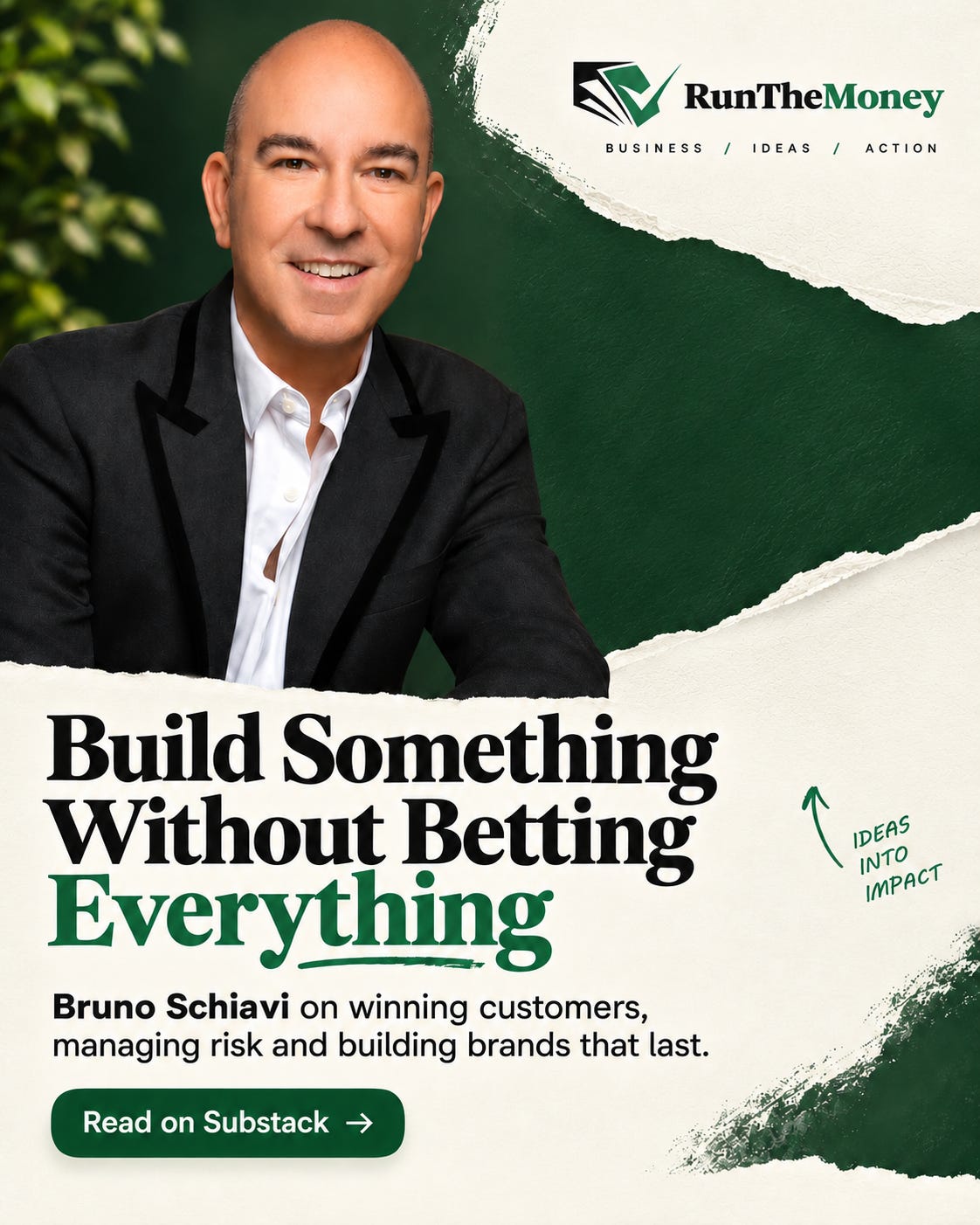
Entrepreneur Bruno Schiavi has built consumer brands and worked with partners including the Kardashians, Heidi Klum and Magic Johnson. In our Run The Money interview, he shares what those experiences taught him about starting small, winning customers and managing risk.
What Happens After the Excitement Wears Off?
Starting a business is exciting.
Figuring out how to make it work while you’re paying bills and supporting a family gets more complicated.
That’s what I wanted to explore in my interview with Bruno Schiavi.
Bruno started his first business in his mum’s garage in Sydney with one credit card. He went on to build brands and work with names including the Kardashians, Heidi Klum and Magic Johnson.
Our conversation covered those experiences, but we also talked about something closer to home for many Run The Money readers:
How do you give an idea a chance without putting everything else at risk?
Let Customers Teach You
Bruno’s early customers surprised him.
Products he expected to sell didn’t always move. Others performed better than he anticipated.
There’s a useful reminder there for anyone who keeps tweaking an idea before showing it to another person.
At some point, you need to find out whether someone will actually pay for it.
That first sale gives you something another week of planning can’t: a customer’s decision.
Decide Where Your Limit Is
Bruno was candid about spending too much early on.
His advice to someone with a family: test demand on a small scale, understand how much room you have if things take longer than expected, and keep household and business money separate.
The question I’d take away from that is simple:
What can you afford to learn from this experiment?
That’s a useful question to answer before the excitement starts making decisions for you.
A Big Opportunity Can Still Be a Bad Deal
One of Bruno’s expensive lessons involved a large retail order with terms that left little room for things to go wrong.
Things went wrong.
Now, he asks:
“Does this still work if things go badly?”
That question deserves a place next to every optimistic forecast.
Getting an opportunity and being able to sustain it are two different challenges.
Give People a Reason to Come Back
We also discussed celebrity partnerships and what happens after a famous name gets people’s attention.
Bruno’s experience points to the work behind repeat purchases: the product, pricing and ability to deliver.
For those of us building something smaller, there’s plenty to think about here.
What happens after someone buys, subscribes or gives us a chance?
Are we giving them a reason to return?
Your Next 30 Days
To close, I asked Bruno what someone with limited funds and no influential connections should do over the next month.
He laid out three practical steps—and the questions he would use to decide whether an idea deserves more time and money.
The full conversation also covers partnership warning signs, selling businesses and why founders sometimes need someone to call more than another resource to read.
→ Read the full interview with Bruno Schiavi on Run The Money
